


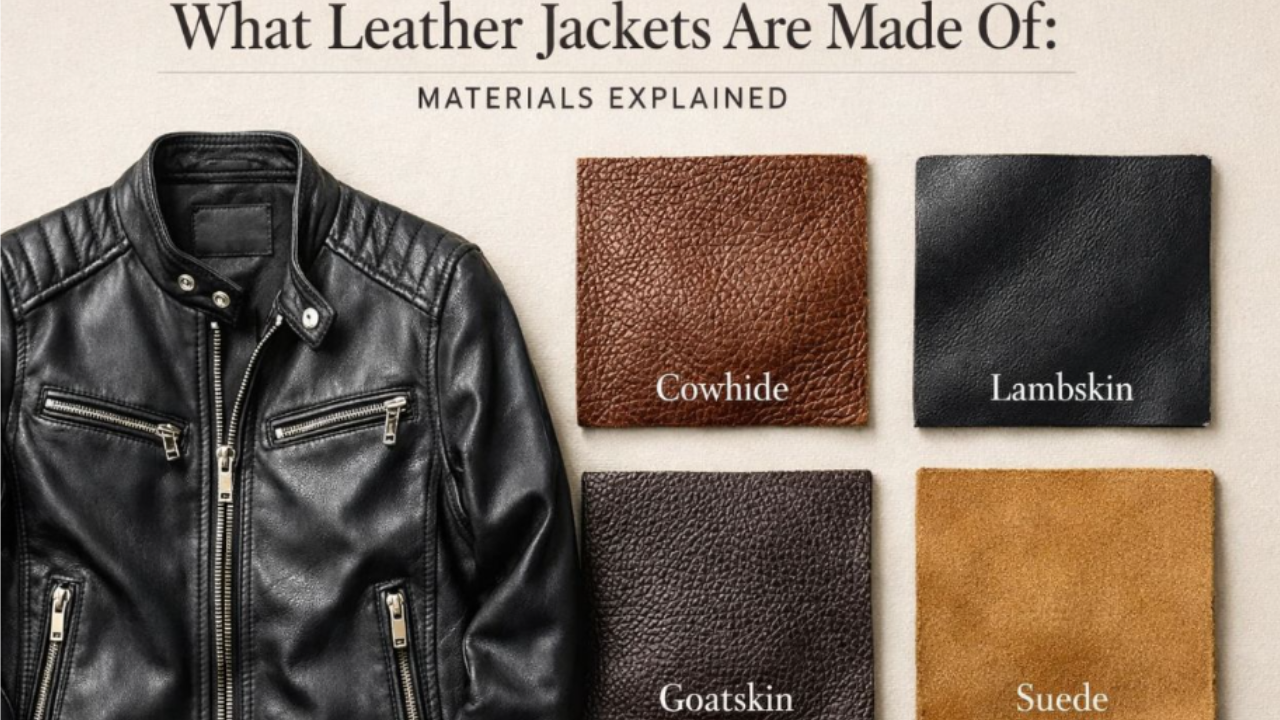
Leather jackets are more than just fashion pieces. They are long term wardrobe investments known for durability, style, and versatility. Whether you are buying your first jacket or upgrading to a premium one, understanding what leather jackets are made of helps you make a smarter decision. Many buyers focus only on looks, but the material plays a major role in comfort, lifespan, and value.
In this guide, you will learn about the different materials used to make leather jackets, how each material performs, and which option suits your lifestyle best. From genuine leather types to modern alternatives, this article breaks everything down in simple terms so you can choose confidently and avoid costly mistakes.
What Materials Are Used to Make Leather Jackets
Leather jackets are made from a variety of natural and synthetic materials. Each material has its own characteristics, price range, and use case.
The most common material used is animal hide, which is processed through tanning to become leather. However, not all leather is the same. The quality depends on the animal source, the cut of the hide, and the finishing process. Some jackets also use non leather materials designed to mimic real leather.
Understanding these materials helps explain why some jackets last decades while others wear out quickly.
Types of Genuine Leather Used in Jackets
Cowhide Leather
Cowhide is the most widely used leather for jackets. It is thick, strong, and highly durable, making it ideal for motorcycle and rugged jackets. Cowhide jackets provide excellent protection against wind and abrasion.
This leather is heavier than others and takes time to break in. Over time, it softens and molds to the wearer’s body, creating a personalized fit. Cowhide is best for people who want long lasting performance and classic style.
Lambskin Leather
Lambskin is known for its softness and lightweight feel. It has a smooth texture and luxurious appearance, making it popular in fashion focused jackets.
While lambskin is extremely comfortable, it is less durable than cowhide. It is best suited for casual wear rather than heavy use. If comfort and elegance matter more than toughness, lambskin is a strong choice.
Goatskin Leather
Goatskin offers a balance between durability and softness. It is more flexible than cowhide but tougher than lambskin. The natural grain gives it a slightly pebbled look that adds character.
Goatskin resists wear and moisture better than many other leathers, making it ideal for everyday jackets that need both comfort and strength.
Buffalo Leather
Buffalo leather is thick, rugged, and highly durable. It has a coarse texture and bold grain that gives jackets a tough, masculine look.
This material is heavier and stiffer at first but becomes more comfortable with wear. Buffalo leather jackets are ideal for people who want a bold style and long term durability.
Leather Grades and How They Affect Jacket Quality
Not all leather jackets are made from the same grade of leather. The grade refers to how the hide is processed and how much of its natural surface remains.
Full Grain Leather
Full grain leather is the highest quality available. It uses the top layer of the hide with all natural markings intact. This leather is extremely durable and develops a rich patina over time.
Jackets made from full grain leather are premium products designed to last for decades with proper care.
Top Grain Leather
Top grain leather is slightly sanded to remove imperfections. It is still high quality but smoother and more uniform in appearance.
This leather offers a good balance of durability, comfort, and price, making it common in mid to high range jackets.
Genuine Leather
Genuine leather is a lower grade made from leftover layers of the hide. It is real leather but less durable and less breathable.
Many budget jackets use genuine leather. While affordable, these jackets may not age as well as higher grade options.
Bonded Leather
Bonded leather is made from leather scraps bonded together with adhesives. It contains minimal real leather content.
This material is not recommended for jackets meant to last, as it tends to crack and peel over time.
Non Leather Materials Used in Leather Style Jackets
Faux Leather or PU Leather
Faux leather is made from synthetic materials like polyurethane. It is designed to look like real leather while being more affordable and animal free.
While modern faux leather has improved significantly, it does not breathe or age like real leather. It is best for short term use or fashion focused pieces.
Vegan Leather
Vegan leather is an eco friendly alternative made from plant based or recycled materials. Some versions use materials like cactus fiber or pineapple leaves.
These jackets appeal to environmentally conscious buyers but vary widely in durability depending on manufacturing quality.
Inner Linings and Supporting Materials
Leather jackets are not made of leather alone. The inner lining plays a major role in comfort and warmth.
Common lining materials include polyester, cotton, satin, and wool blends. Winter jackets may include insulated padding for extra warmth.
Zippers, buttons, and stitching materials also affect durability. High quality metal zippers and reinforced stitching increase the lifespan of the jacket.
How to Choose the Right Leather Material for Your Jacket
Choosing the right material depends on how you plan to use the jacket.
If you want durability and protection, cowhide or buffalo leather is ideal. For lightweight comfort and fashion wear, lambskin works best. Goatskin is perfect for everyday use with balanced performance.
Also, consider climate, frequency of use, and maintenance willingness. Heavier leathers require more care but offer longer life.
Understanding materials ensures you invest in a jacket that fits your lifestyle and budget.
FAQs
What is the best leather for jackets
Full grain cowhide is considered the best for durability and longevity, while lambskin is best for comfort and style.
Are faux leather jackets worth buying
They are suitable for budget buyers or short term fashion use but do not last as long as real leather.
Does real leather last longer than synthetic leather
Yes, genuine high grade leather can last decades with proper care, while synthetic leather has a shorter lifespan.
Which leather is best for daily wear
Goatskin is an excellent choice for daily wear due to its balance of softness and strength.
Final Thoughts
Understanding what leather jackets are made of gives you an advantage as a buyer. The material determines not only how a jacket looks, but also how it feels, performs, and ages over time.
By choosing the right leather type and grade, you can invest in a jacket that matches your lifestyle and lasts for years. Whether you prefer rugged durability or soft elegance, knowing the materials ensures your leather jacket becomes a reliable and stylish companion rather than a short lived purchase.