


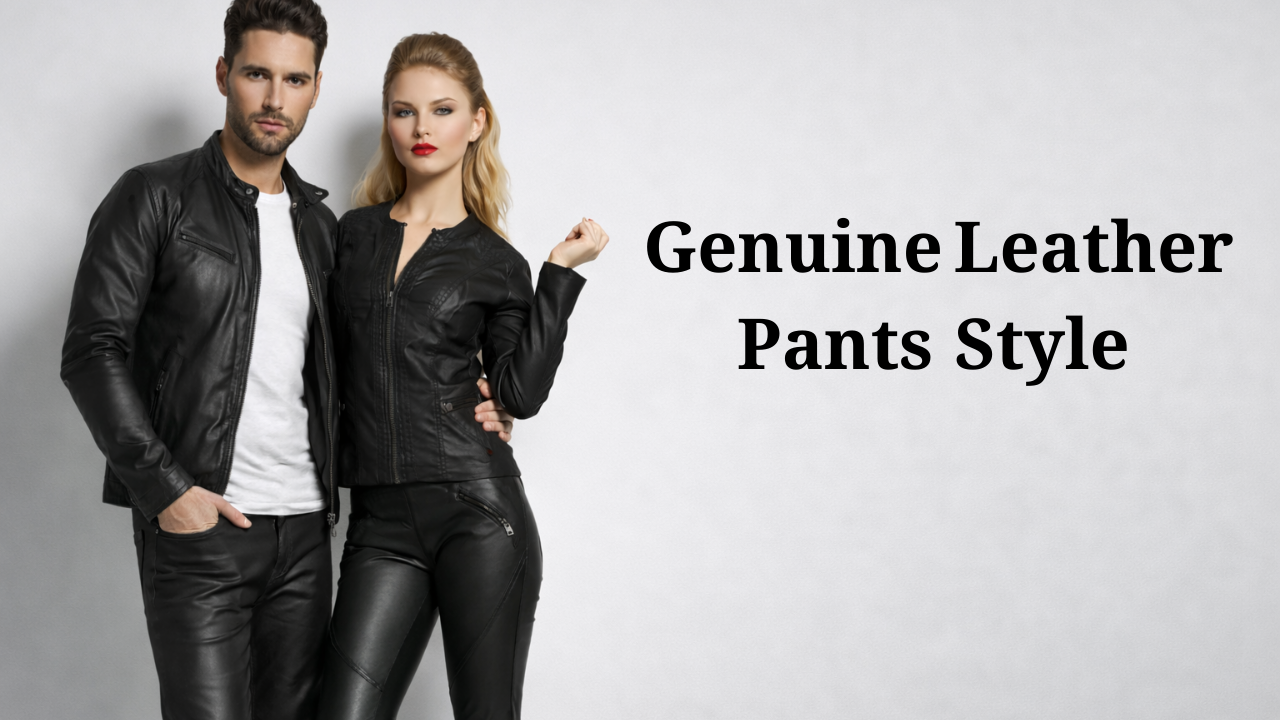
You find one pair of leather pants for $60 and another for $300. In the photos, they look almost the same. So why is the gap so big?
The answer is the material. Many men buy the cheaper pair, watch it crack after one winter, and then buy again. That is not saving money.
In this guide, you will learn what genuine leather pants for men really are, how leather grades differ, which hide suits you, and how to do a simple cost-per-wear check. By the end, you will know if a good pair is worth it for you.
What “Genuine Leather” Really Means
Genuine leather means the pants are made from real animal hide, not plastic.
But here is the catch. On a label, the words “genuine leather” do not promise top quality. Leather comes in grades, and “genuine leather” is often a middle or lower grade. It is real hide, but not always the strongest part of it.
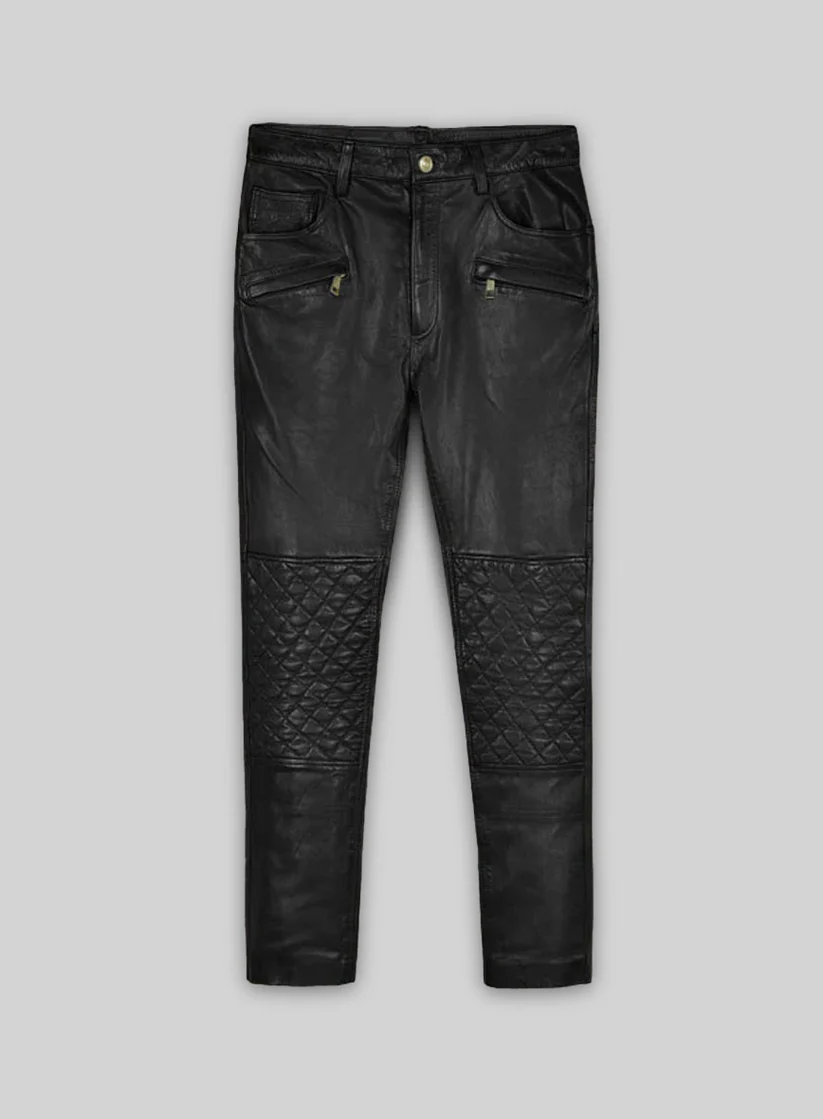
Here is the simple ladder, from best to weakest:
| Grade | What it is | Lasts |
| Full grain | The top layer of the hide, with its natural grain left intact | Longest |
| Top grain | The top layer, lightly sanded and buffed for a smoother look | Very long |
| Genuine / split leather | Real hide, but often from the lower layers | Shorter |
| Bonded leather | Scraps and fibres glued together, then coated | Shortest |
So do not stop at the label. Ask which grade it is. A good seller will tell you.
Style Tip: Leather pants are already the statement piece. Keep the rest of your outfit simple, like a plain tee or a fine-knit sweater.
Why Genuine Leather Pants for Men Are Worth the Money
Real leather earns its price in five ways.
- It takes wear and tear. Good leather does not peel or flake like a plastic coating can. With basic care, one pair can stay in your wardrobe for years.
- It molds you. Soft lambskin slowly shapes itself to your legs. After a few weeks of wear, the pants feel like they were cut for you.
- It breathes better. Real leather lets some air pass through. Plastic-based fabrics trap heat and sweat.
- It ages well. Full grain leather builds a patina. This is a richer colour and a soft shine that comes from use. Small creases give it character instead of looking worn out.
- It keeps its shape. Well-made real leather trousers hold their structure at the knee and seat, even after long days of wear.
Quick rule: Buy once, buy real. A pair you wear for years costs less than three pairs you throw away.
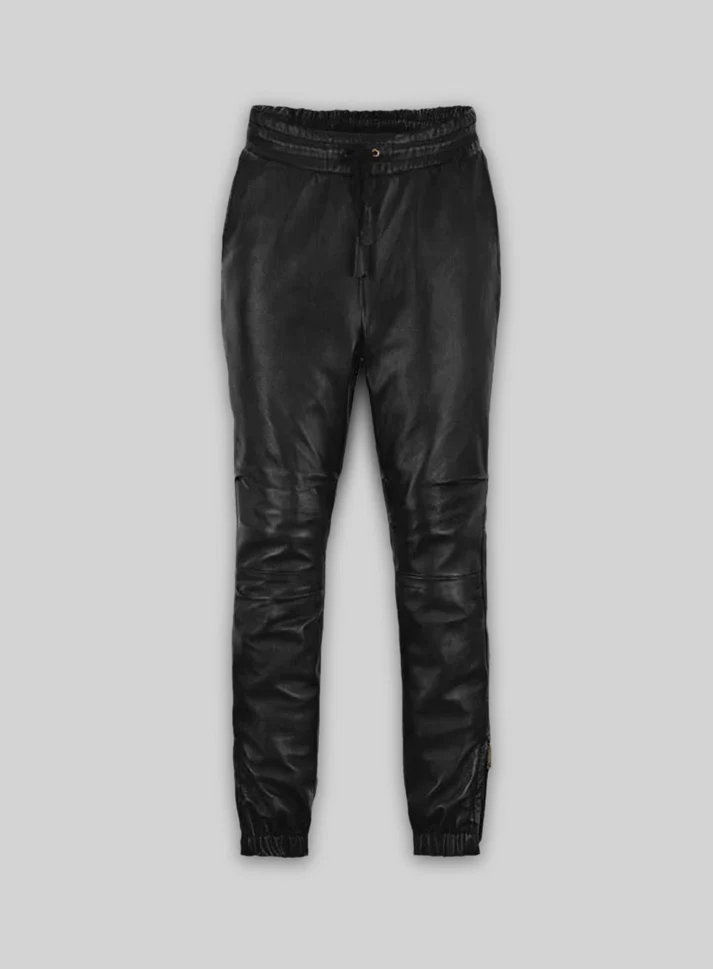
Full Grain vs Top Grain: Which Should You Pick?
Both come from the top layer of the hide. They are just finished differently.
| Full Grain | Top Grain | |
| Surface | Natural grain and marks kept | Sanded for a smoother, even look |
| Strength | Highest | Very good |
| Ageing | Builds a deep patina | Ages well, but with less character |
| Upkeep | Needs a little more care | Easier to keep clean |
| Best for | Long life, daily wear | A neat, uniform finish |
Full grain keeps the strongest part of the hide. Top grain looks cleaner, with a bit less natural character. Both are solid choices when the leather is well made.
Style Tip: Natural marks on full grain are not flaws. They show the leather is real.
Lambskin vs Cowhide: Which Is Right for You?
This choice changes how your pants feel every day.
| Lambskin | Cowhide | |
| Feel | Soft, light, supple | Thicker, firmer |
| Drape | Falls smoothly on the leg | Holds a stiffer shape |
| Comfort | Easy from day one | Needs a break-in period |
| Toughness | Good for daily wear, but shows scuffs and scratches more easily | Tougher against rough use |
| Best for | Everyday, smart casual, night out | Biker style, cold days, heavy use |
Think about how you will wear them. If you want pants that feel easy from the first day, choose lambskin. If you ride a bike or want a rugged pair, cowhide is the better pick.
Quick rule: Lambskin for comfort, cowhide for durability.
The Cost-Per-Wear Math That Changes Your Mind
The price tag shows what you pay today. Cost per wear shows what you really pay.
Here is a simple example. These numbers are only to show the idea, not real prices.
| Cheap Pair | Quality Leather Pair | |
| Price | $80 | $300 |
| Times worn before it fails | 20 | 150 |
| Cost per wear | $4.00 | $2.00 |
The cheaper pair costs less on day one. The better pair costs half as much per wear. And the gap grows every year you keep wearing it.
To work it out for any pair, divide the price by the number of times you expect to wear it.
How to Spot Real Leather Before You Buy
You do not need special tools. A few quick checks help:
- Look at the grain. Real leather has small, uneven pores. Plastic often has a perfect, repeating pattern.
- Check the edges. Real leather has a rough, fibrous edge. Plastic has a smooth, rubbery edge with a fabric backing.
- Press it. Real leather wrinkles softly when you press it, then relaxes.
- Smell it. Real leather smells earthy and natural. Plastic smells chemical.
- Read the product page. A trusted seller names the leather type and grade, such as full grain cowhide or lambskin.
Want a full step-by-step test? Read our guide on how to tell genuine from faux leather pants.
Style Tip: “Genuine leather” alone is not enough. Look for full grain, top grain, lambskin, or cowhide on the label.
What to Check on the Pants Themselves
Good leather is only half the story. Look at the build too.
- Stitching: Even and tight, with no loose threads.
- Zip fly and hardware: Smooth, strong, and firmly attached.
- Pockets: Deep enough to hold a phone and keys.
- Lining: A soft lining feels better against your skin and adds warmth.
- Size: Check the waist, thigh, and inseam against the size chart. Leather gives a little with wear, but it does not stretch like denim.
- Cut: Slim, straight leg, tapered, or relaxed fit. Pick the one that matches how you dress.
Not sure where to start? Our complete guide to choosing men’s leather pants walks you through fit and style in more detail.
How to Make Your Pants Last
A little care goes a long way.
- Wipe off dust and marks with a soft, slightly damp cloth.
- Use a leather conditioner every few months to stop the leather drying out and cracking. Pick one made for your leather type, because soft lambskin needs a gentler product than thick cowhide.
- If the pants get wet, let them dry naturally. Keep them away from heaters and hair dryers.
- Hang them on a wide hanger in a cool, dry place. Avoid folding them for long periods, and keep them out of direct sunlight.
- Never put leather pants in the washing machine. For tough stains, see a specialist leather cleaner.
Ready to Find Your Pair?
Real leather is an investment you wear again and again. If you are ready to pick one, see our range of genuine leather pants for men, made from real lambskin and cowhide and handcrafted since 1980.
FAQs
- Are genuine leather pants for men worth the money?
Yes, if you wear them often. Real leather lasts longer than most plastic-coated options, so the cost per wear is usually lower over time. - How long do genuine leather pants last?
It depends on the leather grade, the build, and your care. With basic care, a well-made pair in full grain or top grain leather can last for years. - What is the difference between genuine leather and real leather?
Both come from real animal hide. But “genuine leather” on a label is often a lower grade than full grain or top grain, so always check the grade. - What is the difference between full grain and top grain leather?
Full grain keeps the natural grain and is the strongest. Top grain is lightly sanded for a smoother look and is a little easier to keep clean. - Is lambskin or cowhide better for leather pants?
Neither is best for everyone. Lambskin is softer and comfortable from day one, but it scratches more easily. Cowhide is thicker and tougher. - Do genuine leather pants stretch?
They give a little as you wear them, mostly at the waist and knees. They do not stretch like denim, so choose your size carefully. - How can I tell if leather pants are real?
Check for an uneven grain, a rough fibrous edge, an earthy smell, and a product page that names the leather type and grade.